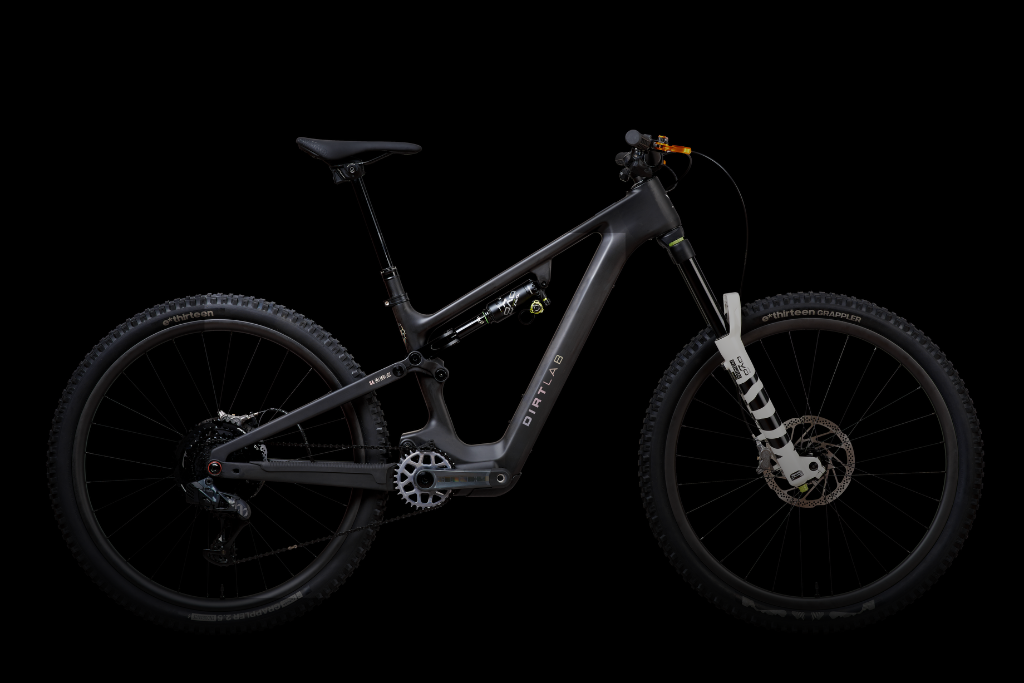
Boutique eMTB & MTB Frames, Est. 2026
TGI
CYCLING
72.6874° W
↓
001 The Collection
ENGINEERED
FOR THE APEX
Each model in our collection is hand-selected and tuned to deliver surgical precision on the trail. Select a model to view its frame kit and build options.
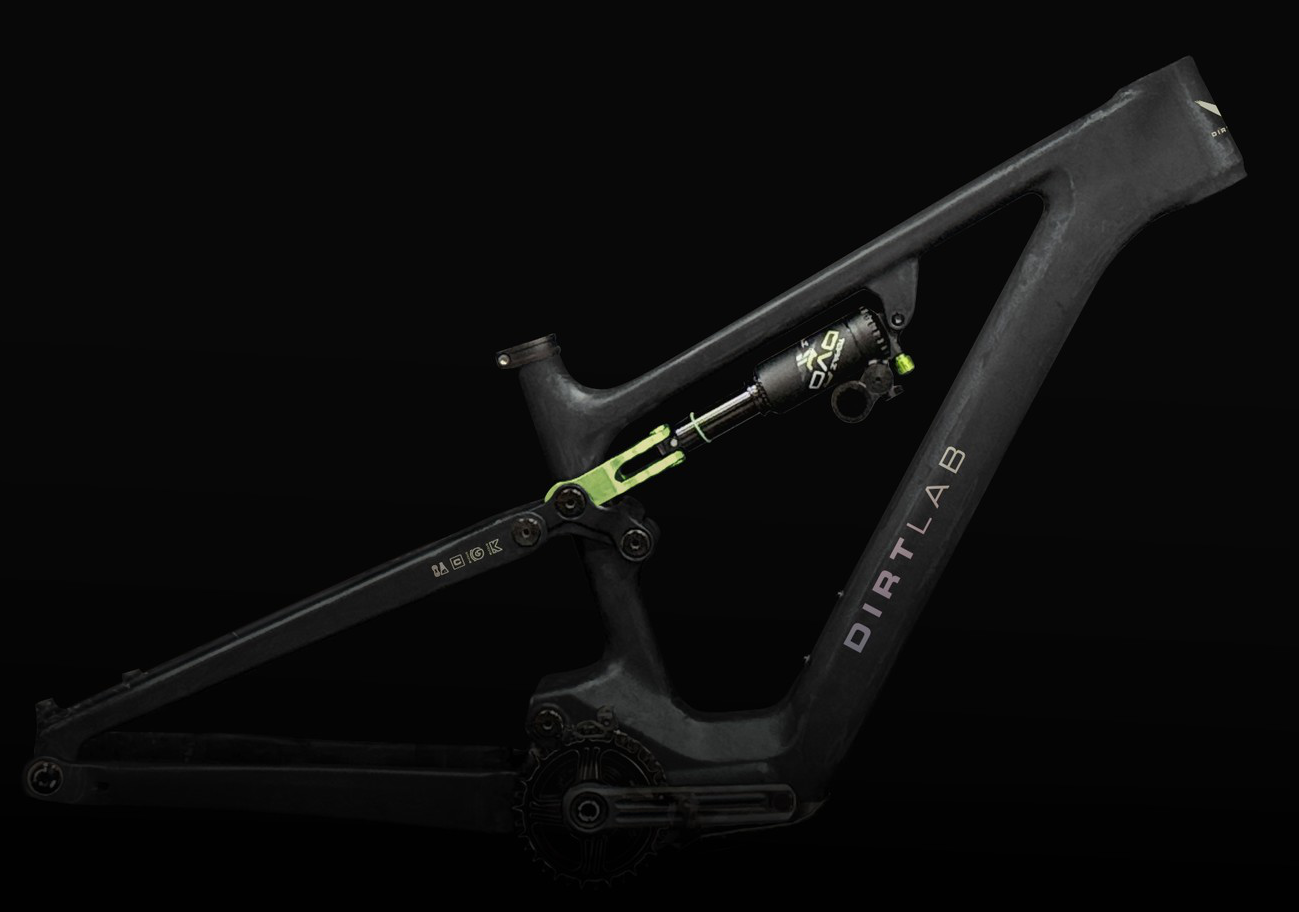
PARATU CP
Starting at $6,589
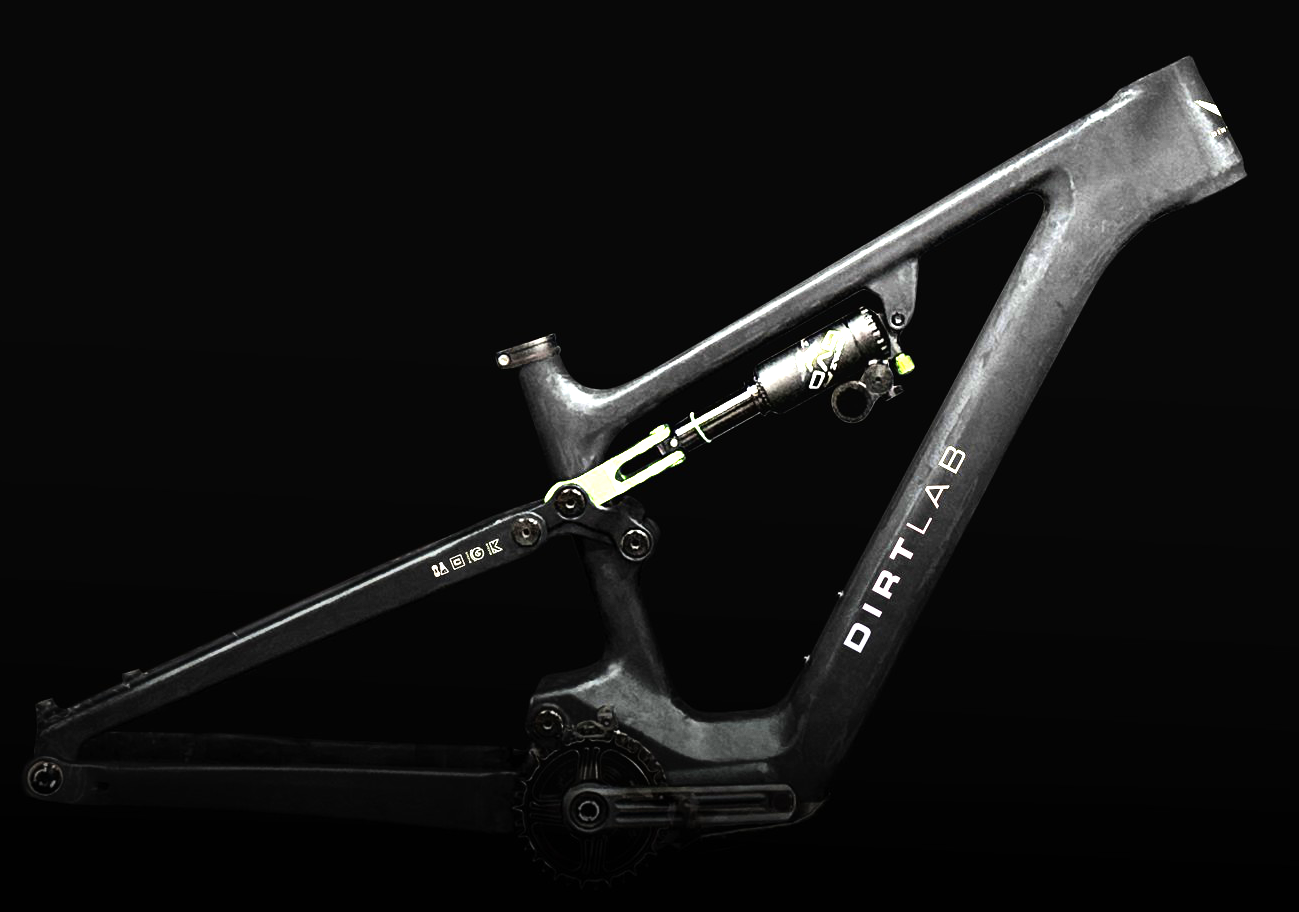
IUHU CP
Starting at $3,179

UNNO MITH
$7,195

UNNO HORN
$7,695
OEM Component Partners




002 The Fleet
THREE PLATFORMS.
ONE PHILOSOPHY.
A side-by-side look at every platform we carry. Two electric, one pure pedal. Same obsession with geometry, kinematics, and ride feel.
DIRTLAB Paratu CP
From $6,589
DIRTLAB Iuhu CP
From $3,179
UNNO Mith
From $7,195
Field Footage — In Motion
002 The Maxon BIKEDRIVE AIR S
THE LIGHTEST
FULL POWER
eMTB MOTOR
Swiss precision engineered for riders who refuse to compromise. The same drives that power NASA Mars rovers, now propelling you up the trail. No rubber-band lag, no artificial surging, no compromise.
2kg
Motor Weight
90Nm
Torque
620W
Peak Power
<65dB
Noise Level
SWISS PRECISION
Designed and built in Obwalden, Switzerland. Every component held to aerospace tolerances — the same drives powering NASA Mars rovers since 1997.
LIGHTEST IN CLASS
At 2 kg, it undercuts every competitor mid-drive by over 600 g. You feel the difference on every climb — full power without the penalty.
CONCENTRIC DESIGN
The motor wraps around the bottom bracket axle, preserving a perfect chainline and a narrow Q-factor for a natural pedal stroke.
WHISPER QUIET
Under 65 dB at full load. On the trail, you hear your tires and the wind — not your motor. Silence engineered, not muted.
“Whether you are trail-surfing on the way down, you don't hear a thing. You hear the trail, not the motor.”
On the CP platform's mechanical quietness — no pedal kickback, a hushed drivetrain. Applies identically to the pedal-only Iuhu CP.
The Decision
WHY WE
CHOSE MAXON
When we set out to build our eMTB, one principle was non-negotiable: it must ride like a real mountain bike. That meant the motor had to disappear. No rubber-band pedal lag, no artificial surging, no extra 3 kg hanging off the bottom bracket.
Maxon has spent 60+ years building precision motors for the most demanding environments on Earth — and beyond. Their drives are on every NASA Mars rover since Sojourner. The BIKEDRIVE AIR S brings that same obsessive engineering to the trail. At 2 kg, it is the lightest mid-drive motor on the market. When you stop pedalling, assist cuts within milliseconds. Power when you want it, silence when you don't.
Support Levels
FOUR LEVELS. PICK WHAT YOU NEED.
Level 0
System on, motor off. Ride entirely under your own power, no resistance.
Level I
Range-focused. Gentle, natural support that maximizes battery life.
Level II
Balanced. The everyday-trail level, responsive on climbs, efficient all day.
Level III
Climb-focused. Maximum support. The full system peak: 90 Nm / 620 W / 400%.
System Breakdown
MAXON BIKEDRIVE AIR S COMPONENTS
Motor
Mid-drive, concentric
90 Nm torque, 620 W peak, 2 kg, < 65 dB noise
Internal Battery
400 Wh lithium-ion
Integrated in the downtube, ~2.0 kg, invisible from the outside
Range Extender
250 Wh auxiliary
Bottle-cage mounted, hot-swappable, ~1.3 kg, 650 Wh combined
HMI / Remote
POWERTAB bar remote
Minimal + / - control, switch levels on the fly
Connectivity
Bluetooth LE / ANT+
Pairs with GPS watches and bike computers, BIKEDRIVE Connect app
Gear Sensor
Integrated shift detection
Motor pauses for the drivetrain, clean shifts under load
Certification
EN 15194 (EU pedelec)
EU-legal 250 W nominal · 400% assist peak
US Compliance
US Class 1 compliant
20 mph assist limit · under 750 W · approved for non-motorized trails · always check state & local regulations
System Weight
Engine system
3.7 kg — motor + battery + HMI + crankset
Best eMTB
Motor 2026
2026 Motor Group Test
E-MOUNTAINBIKE · Lars Engmann · 29.12.2025
“On the trail, the maxon AIR S feels like a light-assist motor on steroids — thanks to its linear power delivery, the ride experience remains very natural, and yet provides the extra boost you need.”
Pair with the BIKEDRIVE Connect App
Field Footage / maxon AIR S in Motion
MAXON BIKEDRIVE AIR S, CERTIFIED FOR THE PARATU CP
003 K-Volve Kinematics
K-VOLVE
KINEMATICS
The Paratu CP and Iuhu CP Concentric Pivot geometry is tuned for consistent anti-squat across the gear range, minimising pedal bob without a platform damper or lockout. The suspension stays active while climbing without sacrificing efficiency.
97.3%
At Sag
34/28t, primary climbing gear
115%+
Small Cog
34/10t, high-speed pedalling
~72%
Large Cog
34/50t, granny gear climbing
38.7%
At Bottom
Steep decline through travel
"The anti-squat curve is textbook-perfect, high enough to eliminate pedal bob without a lockout, but shaped so the suspension stays active over obstacles. You get the pedalling efficiency of a locked-out shock with the traction of a fully open one."
Fil Palmer, kinematic analyst · @ebikeitalia6832
How Anti-Squat Works
Anti-squat describes how effectively chain tension counteracts suspension compression under pedalling load. At 100%, the chain force exactly cancels the squat force. The suspension neither compresses nor extends under pedal input.
The Paratu CP sits at 97.3% at sag with 34/28t: the geometry does the bob-control work that on other bikes must be done by compression damping. LSC stays at 2-3 clicks or fully open. The coarse compression circuit on a budget shock is never exercised in the regime where it fails.
The eMTB Advantage
The Maxon BikeDrive Air S delivers up to 90 Nm of continuous torque through the drivetrain. Without near-100% anti-squat, this torque would continuously compress the rear suspension.
Anti-Squat Through Travel
Climbing Zone
Anti-squat stays above 65%. Chain tension nearly balances squat force. The suspension absorbs every small input while the drivetrain feels rigid. The bike climbs like a hardtail with active traction.
Descending Zone
Anti-squat drops from 65% to 38.7%. The chain no longer balances the squat force and the suspension opens fully for impact absorption. You aren't pedalling here, so low AS is correct. Climbing machine becomes impact absorber.
Anti-Rise & Braking Kinematics
CALM ON THE BRAKES.
QUIET ON THE CLIMB.
Brake late and hard into a steep, loose chute and the bike stays planted, no skipping, no pitching you over the bars. Anti-rise is held near 49% at sag and trends lower toward bottom-out, so braking forces neither lock the rear solid nor jack it down under you.
49.1%
At Sag
Braking force counter-balance
<100%
Throughout
Sub-100% across full travel
3.0–3.5°
Pedal Kickback
Crank rotation under impact
~2%
Progression
Near-linear leverage curve
Anti-Rise
How braking forces load the suspension. Kept sub-100% throughout so the rear never jacks down or locks solid under hard braking. The chassis holds its attitude instead of pitching forward.
Axle Path
The arc the rear wheel travels. Rearward early to absorb square-edge hits rather than hanging up on them. The wheel moves up and back through obstacles instead of fighting them.
Leverage Curve
Near-linear with roughly 2% progression so grip and support stay consistent through the stroke. Easy to tune with air or coil without fighting a ramp-up that changes the feel mid-travel.
Pedal Kickback
Held to 3.0 to 3.5 degrees so square hits do not yank the cranks back under your feet. Low enough that impacts stay off your feet, even deep in the travel.
Gearing Effect
| Ratio | AS at Sag | Use Case |
|---|---|---|
| 34/50t | ~72% | Steep technical climbing, lowest gear |
| 34/34t | ~90% | Moderate climbing |
| 34/28t | 97.3% | Primary climbing gear, most used |
| 34/21t | ~108% | Fast rolling / mild climbing |
| 34/10t | 115%+ | High-speed pedalling, flat / downhill |
The bike self-adjusts: harder gears (where more power is applied) produce higher anti-squat, a consequence of concentric pivot placement.
Competitor Comparison
| Bike | AS | Lockout? |
|---|---|---|
| Paratu CP | 97.3% | No |
| 6-bar linkage (160mm eMTB) | ~100% | No |
| 4-bar Horst (170mm, 2026) | ~96% | Recommended |
| VPP (160mm) | ~92% | Recommended |
| Alt. concentric pivot (160mm) | ~100% | No |
| Dual-link VPP (180mm premium) | ~95–100% | Recommended |
004 / Carbon Construction
CARBON
CONSTRUCTION.
T700/T800 monocoque carbon fiber frames engineered for the precise balance of stiffness, compliance, and durability that serious mountain biking demands.
T700 / T800
Carbon Grade
1,900 g
Frame Weight*
100%
Monocoque
Carbon Fiber Grades
THE RIGHT FIBER IN THE RIGHT PLACE.
T700 provides the structural backbone, high tensile strength, proven durability, excellent fatigue resistance. T800 is strategically placed in high-stress zones where its higher modulus delivers additional stiffness without weight penalty. A frame made entirely from the stiffest carbon would ride like a jackhammer; one made entirely from compliant fiber would flex under power. The art is in the blend.
T700 Carbon
- Role
- Primary structure
- Character
- Strong, durable, forgiving
- Where Used
- Majority of frame
T800 Carbon
- Role
- Targeted reinforcement
- Character
- Stiffer, lighter, precise
- Where Used
- BB area, head tube, pivots
Monocoque Construction
Every carbon frame is built as a single-piece monocoque shell. Unlike tube-to-lug construction where separate tubes are bonded into lugs (introducing potential failure points), a monocoque frame is laid up as one continuous structure inside a precision mold. No bonded joints in the main triangle.
Carbon plies wrap continuously around the bottom bracket, through the downtube, up the seat tube, and around the head tube. The result is lighter, stiffer, and more durable than bonded alternatives, with finer control over flex characteristics.
Directional Layup Engineering
STIFF IN ONE AXIS. COMPLIANT IN ANOTHER.
Carbon's defining advantage over metal is directional control. In aluminum or titanium the material is equally stiff in every direction. Carbon plies can be oriented to be stiff in one axis and compliant in another — tuning ride quality zone by zone. The BB is engineered for maximum stiffness so every watt transfers into forward motion; the seatstays are deliberately compliant, absorbing trail chatter for grip and reduced fatigue.
Bottom Bracket
100%Maximum stiffness
Head Tube
90%Very high stiffness
Downtube
80%High stiffness
Top Tube
55%Moderate compliance
Seatstays
40%Tuned compliance
Chainstays
65%Stiff laterally, compliant vertically
Manufacturing Process
FROM PRE-PREG TO FINISHED FRAME.
PATTERN CUTTING
Pre-preg carbon sheets CNC-cut to exact ply shapes. Each frame uses 200+ individual plies, each with a specific fiber orientation (0°, 45°, 90°) optimized for its position in the layup.
HAND LAYUP
Plies laid into precision aluminum molds by hand, following a strict schedule that defines the exact sequence, orientation, and overlap of every ply. Where the frame's ride character is determined. Every hand-layup is conducted at our Taiwan facility — by trained carbon technicians whose craft is the foundation of frame quality.
BLADDER MOLDING
An internal bladder inflates under pressure inside the mold, compacting the carbon plies against the walls. Eliminates voids and ensures uniform fiber density.
AUTOCLAVE CURE
The mold enters an autoclave at controlled temperature and pressure. Epoxy resin cures over several hours, cross-linking into a rigid matrix that locks the fibers in position permanently.
CNC MACHINING
After demolding, pivot holes, headtube faces, bottom bracket threads, and cable routing ports are CNC-machined to tight tolerances for reliable component fitment.
QC & FINISH
Each frame undergoes ultrasonic inspection for internal defects, dimensional verification on a surface plate, and visual inspection under controlled lighting — then painted, clear-coated, and graphics applied.
We recommend the Raw UD finish with a clearcoat — the protective coat lets the unidirectional carbon layers show through, exposing the fiber orientation that defines the frame's character.
005 S-Volve Sizing
SIZE EVOLUTION
NOT SIZE BY HEIGHT
Where most brands assign a size by height alone, S-Volve starts with reach (the horizontal distance from the bottom bracket to the head tube) and builds outward. The result is a system where every rider, regardless of torso length, arm span, or inseam, finds the frame that fits their body, not just their height.
Why Standard Sizing Fails
Conventional S / M / L by rider height is a blunt instrument. Two riders of identical height may have very different torso-to-leg ratios, arm lengths, or style preferences. A long-torso rider on a Medium by height finds the reach too short; a short-torso rider on the same Medium finds it too long. Height is a proxy, not a measurement. S-Volve replaces it with reach-based sizing, cross-referenced with rider proportions and intended style.
The Three DIRTLAB Sizes
Shorter reach for quick, responsive handling. Suited to riders in the shorter height range or shorter-torso proportions who prefer a more upright, agile position. Pairs well with a shorter stem and wide bars.
The benchmark size, designed around the most common combination of rider proportions and trail demands. A balanced reach that works equally well on technical descents and sustained climbs. The most versatile of the three sizes.
Extended reach for taller riders or those who prefer a more stretched, low-and-long position. More stability at speed; suits longer torsos. Works best with a short to zero-rise stem and bars set at a comfortable width.
RA Reach Adjust. Closing the Size Gaps.
Every frame is compatible with the RA Reach Adjust headset system. RA shifts the front axle path by ±5 mm in the horizontal plane without affecting head angle, stack, or any other geometry variable, giving two positions on any frame size.
RA is a mechanical headset. No spacers, no stem angle changes, no bar adjustments. Set once during build; it does not move.
Six Fitting Positions
No such thing as "between sizes." Every rider has a position.
S-Volve × G-Volve
G-Volve sets the angles and proportions of the frame; S-Volve matches you to the right frame size within that geometry. A correctly sized frame running G-Volve geometry feels balanced, planted and confidence-inspiring at both ends of the speed range. An incorrectly sized frame, even with perfect geometry, will not.
Unsure which size is right for you? Send your measurements, riding style and goals before you order. Getting the size right is the most important decision you will make about your frame.
Get Sizing Advice006 / Range Intelligence
HOW FAR CAN A
PARATU CP TAKE YOU?
Predictions calibrated from real GPS-logged rides — 7+ activities, 175+ km of climbing, two riders with completely different styles. This is field data, not lab numbers.
20 / 60 / 20 — the everyday baseline
Climb Capability, Mixed Field Data
| Battery | Worst | Likely | Best |
|---|---|---|---|
| 400 Wh only | 1,815 m | 1,882 m | 1,960 m |
| 400 + 250 Wh RE | 2,949 m | 3,058 m | 3,185 m |
Verdict
Max Range
34.9km
Max Climb
1,920m
Estimates scale from the Wörgl calibration anchor. Real range varies with rider weight, cadence, temperature & support tuning.
007 / The Biomechanic Lab
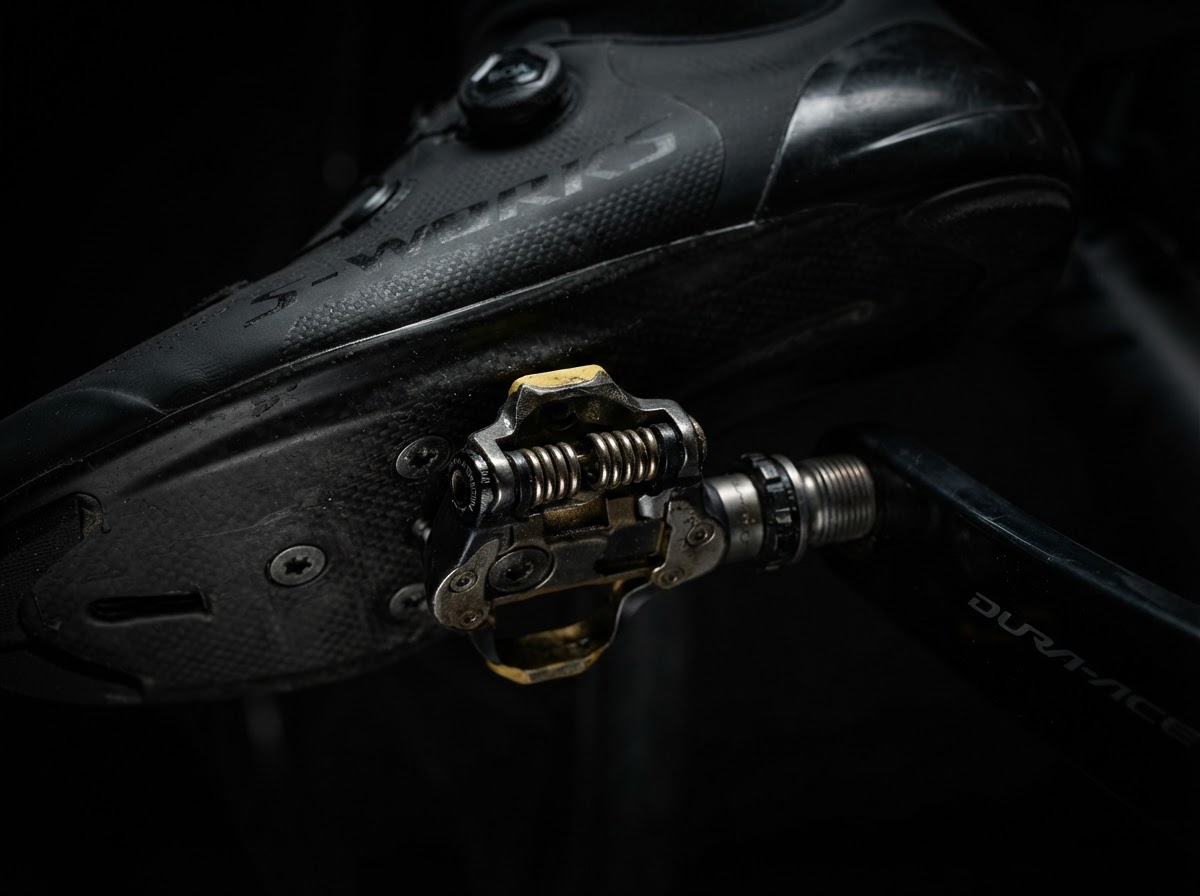
±0.5mm
90 min
2,400+
YOUR BODY
IS THE ENGINE
Our Biomechanic Lab uses motion-capture technology and pressure analytics to engineer the perfect interface between rider and bike. This is not a fitting — it's a calibration.
POSTURAL ANALYSIS
3D skeletal mapping and flexibility assessment
PRESSURE MAPPING
Dynamic saddle and pedal load distribution
CLEAT ALIGNMENT
Sub-millimeter cleat positioning for power transfer
COCKPIT CALIBRATION
Stem, bar width, and lever reach optimization
THE BIOMECHANIC LAB OPENS IN 2027 — JOIN THE WAITLIST BELOW TO BE NOTIFIED WHEN BOOKINGS GO LIVE.
Join the waitlist008 / Trail Advocacy
POWER LIMIT
GUIDANCE
Not all eMTBs are created equal, and not all are welcome on the same trails. Class 1 defines the benchmark for backcountry access: pedal-assist only, with motor support ceasing the instant you exceed 20 mph (32 km/h). No throttle. No loopholes. Just measured, human-amplified effort.
20 mph
32 km/h ceiling
Pedal-Actuated
No throttle
Ceases
At threshold
Widest
Of all eMTB classes
The Paratu CP eMTB operates strictly within the Class 1 envelope — the Maxon BIKEDRIVE AIR S delivers its full torque only while you pedal and cuts cleanly at the 20 mph threshold. This is not a limitation. It is the contract that keeps singletrack open to eMTBs. Suggested power limits are not bureaucracy; they are the line between access and closure. Honor the class, and land managers, state forests, and volunteer networks can advocate for continued access with confidence. Exceed it, and the gate closes for everyone.
THE STEWARDSHIP
PLEDGE
Every TGI Cycling build carries a commitment that extends beyond the rider. We pledge to build within Class 1 limits, to educate every owner on responsible eMTB use, and to give back to the trails that give us everything.
Every Paratu CP eMTB leaves the workshop tuned to honor the 20 mph assist ceiling. Full torque only while you pedal, clean cutoff above the line.
Yield to non-motorized trail users, protect wet and thawing singletrack, and stay on designated routes. Speed you don't use is access you keep.
A donation to the Vermont Mountain Bike Association (VMBA) is embedded in every eMTB sale, funding trail building, maintenance, and advocacy across the state.
Support land-use policy and legislation that preserves responsible Class 1 eMTB access on public trails for generations to come.
Embedded Donation
$50 of every Paratu CP eMTB sale supports VMBA trail programs.
Riders may add a personal contribution at checkout. 100% routed to the Vermont Mountain Bike Association for trail building, maintenance, and access advocacy statewide.
Knowledge Base
FREQUENTLY
ASKED
QUESTIONS
Everything you need to know about our frames, the Maxon system, shipping, and warranty. Can't find your answer?
Contact us directly →Ordering & Payment
Shipping & Delivery
Warranty & Service
White Papers & Technical Resources
eMTB & Maxon Motor